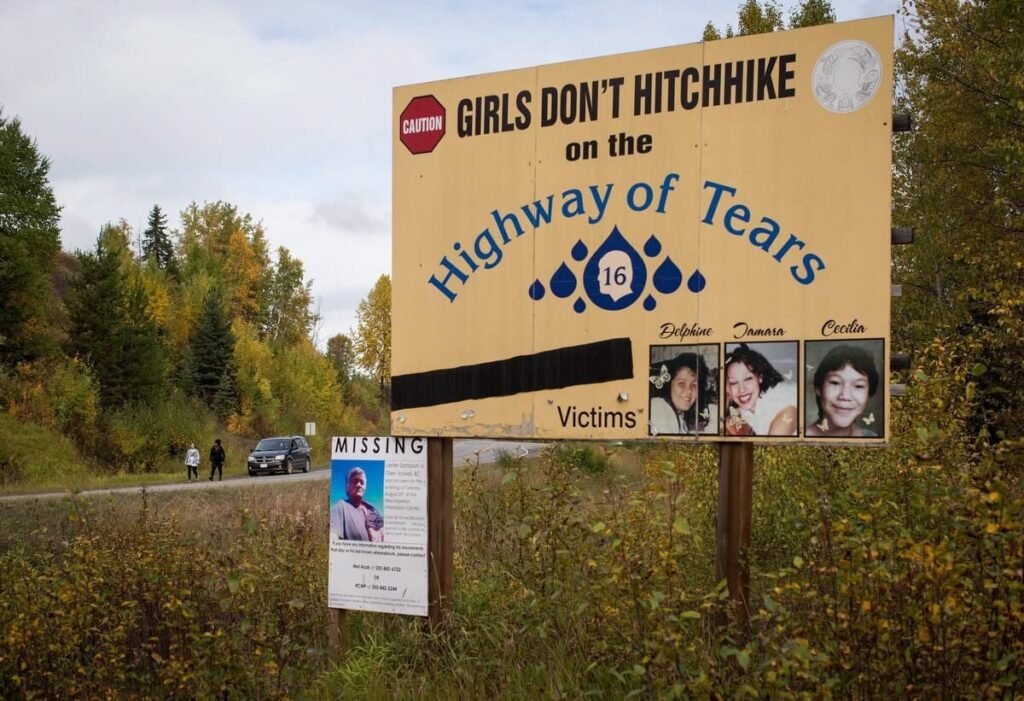
When people think of Canadian highways, they usually imagine beautiful mountains, forests, and quiet roads. But there’s one highway in northern British Columbia with a very different story — one filled with sadness, mystery, and injustice. This road is called the Highway of Tears.
📍 Where Is It?
The Highway of Tears is part of Highway 16, which runs across northern British Columbia, from Prince George to Prince Rupert. It’s around 725 kilometers long. Although some people confuse it with Alberta, this highway is mostly in British Columbia.
It passes through many small towns and Indigenous communities. It’s a beautiful area, but it’s also very isolated, with long stretches of road where you might not see another person for miles.
Why Is It Called the Highway of Tears?
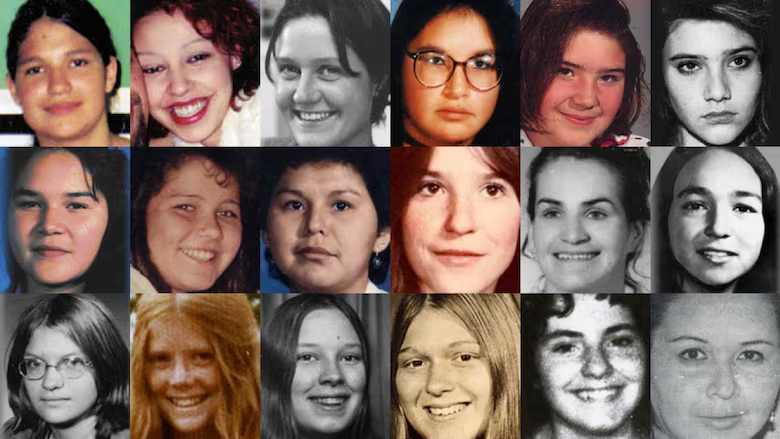
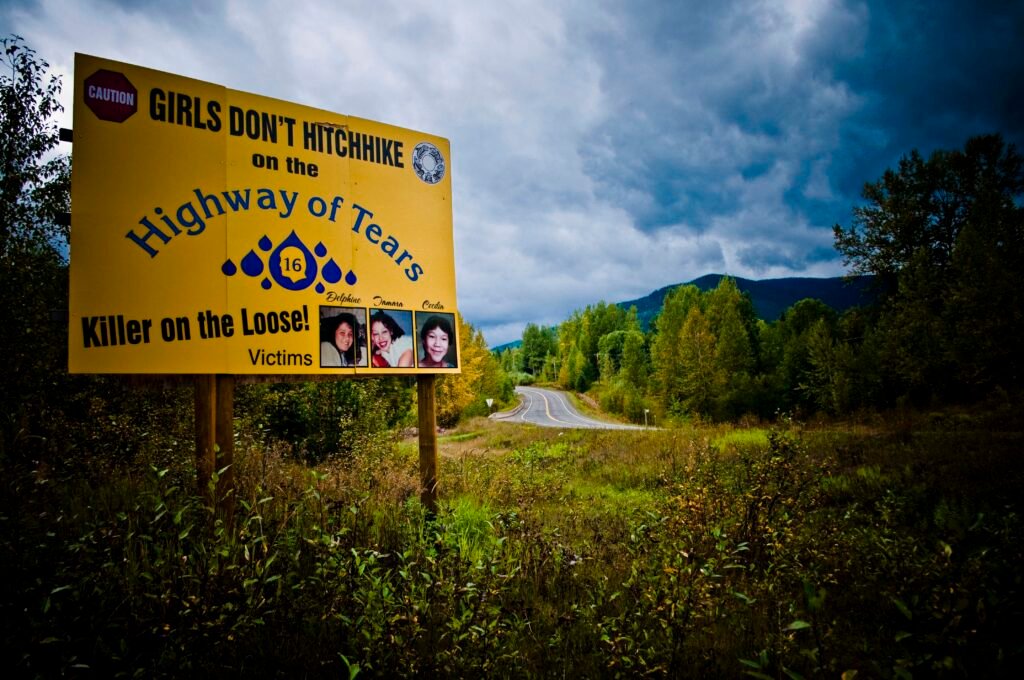
The name “Highway of Tears” came from a memorial event in 1998. People used it to describe the many missing and murdered Indigenous women and girls who disappeared along this highway.
Since the late 1960s, at least 18 women (officially reported) have gone missing or been found murdered along this road. Indigenous communities believe the true number is much higher, possibly over 40.
Most of the women were young Indigenous women who were hitchhiking — trying to get to school, work, or home. They had no other way to travel because there were no buses or safe transportation options.
Why Did This Happen?
There are several reasons why this tragedy has continued for so long:
- No public transportation: Many people in the area don’t have cars and are forced to hitchhike.
- Remote location: The highway passes through forests and empty land, which makes it easy for crimes to happen unnoticed.
- Lack of cell service: In the past, there was little or no phone service, so people couldn’t call for help.
- Systemic racism: Many families of missing Indigenous women say the police didn’t take the cases seriously or didn’t investigate properly.
- Ongoing effects of colonization: Indigenous communities face more poverty and violence because of long histories of injustice.
Have the Cases Been Solved?
Sadly, many of the cases remain unsolved.
Some investigations have led to arrests, but most families are still waiting for answers. In 2005, the RCMP (Royal Canadian Mounted Police) created a special task force called Project E-Pana to review the cases of women who disappeared or were murdered under similar conditions.
Even with this task force, only a few cases have been solved. Many families feel that police didn’t take the disappearances seriously at first — especially because most victims were Indigenous.
Some believe that if the victims had been non-Indigenous, the response might have been faster and more thorough. This belief has led to national conversations about racism in policing and the need for systemic change.
What Has Been Done?
In 2015, the Canadian government started a National Inquiry into Missing and Murdered Indigenous Women and Girls. In 2019, the final report was released. It said Canada needs to do more to protect Indigenous women and fix the problems that cause these tragedies.
The government and local groups have taken some steps, like:
- Adding bus services (like BC Bus North) along Highway 16
- Expanding cell phone coverage
- Raising public awareness
- Placing memorial signs along the road
But many families and communities say more needs to be done — especially in solving the cold cases and making the area safer.
Why This Matters
Each woman who disappeared had a name, a family, and dreams for the future. They weren’t just numbers — they were loved and are deeply missed.
By learning about the Highway of Tears, we help honor their memory and support their families. It also helps us understand the challenges Indigenous people still face in Canada today.
Final Thoughts
The Highway of Tears is more than just a road. It’s a reminder that we must care for each other, fight for justice, and never forget those who are missing. Together, by listening and learning, we can help build a safer, more respectful future for everyone.
it’s a powerful reminder of what happens when people are forgotten and ignored. Many of the mysteries remain unsolved, and families are still searching for justice.